Rajshahi district
6 parliamentary seats · 9 upazilas. The current member for each seat, according to Parliament's database.
About Rajshahi district
Rajshahi District is a district in mid-western Bangladesh. It is a part of Rajshahi Division. The metropolitan city of Rajshahi is in Rajshahi District.
The name
Name Rajshahi encompasses two terms Sanskrit Raj and Persian Shahi. Historian Bolch Mann thinks that, this term is evoled from Zaminder of Vaturia, Raja Ganesha. But Beveridge discards Bolch Mann by mentioning that Rajshahi is not an ancient term and Vaturia is far away from Rajshahi. According to W W Hunter, name Rajshahi is evolved from Raja Ramjiban of Natore.
History
The Mughal Emperor Akbar appointed the Puṭhia Raj family to govern the Rajshahi region under the governor "Pitambar". In 1772, the Rajshahi District was established. Parts of it eventually became the districts of Bogura, Malda, Natore, Naogaon, Nawabganj, and Pabna. On 1 April 1876, Rajshahi town was made as a municipal town. During the Bangladesh War of Independence in 1971, the town was the site of battles between the Mukti Bahini and the Pakistan Army. Between 26 and 30 March, Pakistan forces killed 31 people in Godagari upazila. A battle on 30 March resulted in the death of an East Pakistan Rifles member.
Geography
Rajshahi District is bounded by Naogaon District to the north, Natore District to the east, Chapai Nababganj District to west and a small part of Kushtia District and the river Padma to the south. The district consists of alluvial plain.
People
According to the 2022 Census of Bangladesh, Rajshahi District has 775,245 households and a population of 2,915,009 with an average 3.67 people per household. Among the population, 455,892 inhabitants are under 10 years of age. The population density is 1,202 people per km2.
Economy
Rajshahi Metropolitan is widely known as Silk City of Bangladesh, the Bangladesh Sericulture Development Board is situated at Rajshahi. There are seven silk factories in the BSCIC Industrial Town in Rajshahi. An inter-city train is named Silk City Express after Rajshahi; it serves the route between Rajshahi and Dhaka. Rajshahi is also notable for producing mangos and silk.
Rivers
There are ten rivers in this district, totaling 146 km in length. Other rivers include Mahananda, Baral and Barnai.
Source: Wikipedia, Rajshahi District · CC BY-SA 4.0
Places to see of Rajshahi
- Bagdhani Mosque
- Bagha Mosque
- Kismat Maria Mosque
- Tomb of Shah Makhdum
- Tomb of Shah Sultan
- Talando Shiv Mandir
- Puthia Temple Complex
- Boro Kuthi
Map of the district
Boundaries from the Election Commission's description of the seats, drawn on the maps of OpenStreetMap (upazilas), OCHA (city corporations) and geoBoundaries (city wards; BBS, 2015); approximate. Background map from OpenStreetMap. 6 seats; tap an area to open that seat's page.
Seats and their members
Rajshahi is a district in Rajshahi division with 6 seats in Parliament: Rajshahi-1 (Godagari and Tanore upazilas), Rajshahi-2 (The areas of Rajshahi City Corporation), Rajshahi-3 (Paba and Mohanpur upazilas), Rajshahi-4 (Bagmara upazila), Rajshahi-5 (Durgapur and Puthia upazilas) and Rajshahi-6 (Charghat and Bagha upazilas). In the 13th Parliament, of these seats the BNP holds 4 and Jamaat-e-Islami 2. In the 12th Parliament (2024), of these seats the Awami League held 5 and an independent 1.
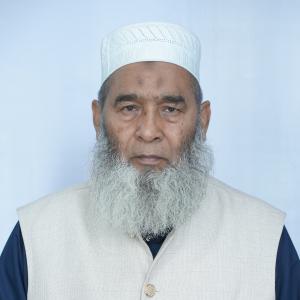 Md. Mujibur RahmanRajshahi-1, Jamaat-e-Islami
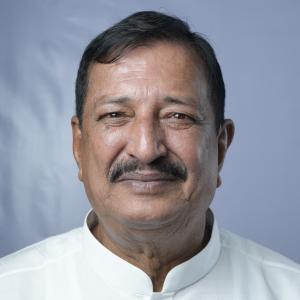 Md. Mizanur Rahman MinuRajshahi-2, BNP
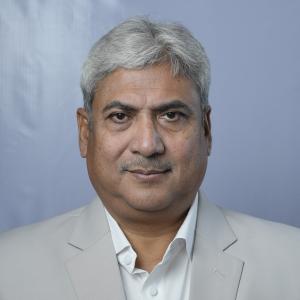 Mohammad Shofiqul Haque MilonRajshahi-3, BNP
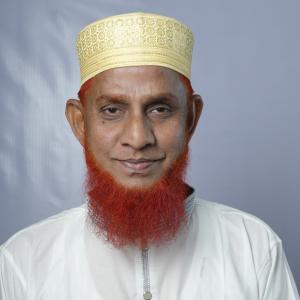 Md. Abdul Bari SarderRajshahi-4, Jamaat-e-Islami
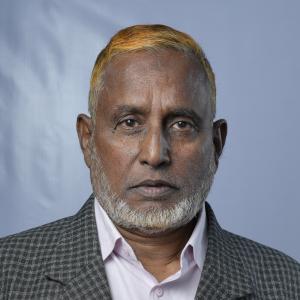 Prof. Nazrul IslamRajshahi-5, BNP
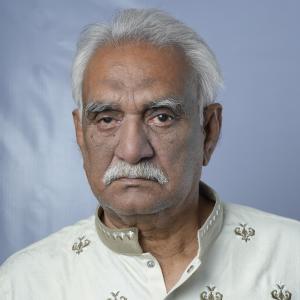 Md. Abu Sayed ChadRajshahi-6, BNP
Source: Parliament of Bangladesh | Updated 24 October 2026