Gaibandha district
5 parliamentary seats · 7 upazilas. The current member for each seat, according to Parliament's database.
About Gaibandha district
Gaibandha District is a district in northern Bangladesh, located within Rangpur Division. Covering an area of 2,179.27 square kilometers, it had a population of 2,562,232 as of the 2022 census. The district's administrative headquarters and largest urban center is Gaibandha town. Originally established as a subdivision in 1875 under the name Bhabaniganj, it was renamed Gaibandha in the same year. On February 15, 1984, Gaibandha was officially upgraded to district status.
The name
There are two prevailing theories regarding the origin of the name Gaibandha. The more widely accepted theory dates back around five thousand years to the time of King Birat, ruler of the Matsya Kingdom, which had its capital in the Gobindaganj area. The term Matsya Desh translates to "land of fish", as the kingdom was rich in fish.
History
In ancient times, this region was submerged under water, gradually filled by the silt deposits of the Teesta, Brahmaputra, and Jamuna rivers. Historical references to this can be found in the writings of the renowned Chinese traveler Xuanzang, as well as in the astronomical works of Ptolemy. Significant natural events, such as the 1787 flood and the 1898 earthquake, dramatically altered the area's landscape, redirecting the flow of the Teesta River.
Geography
Gaibandha District spans an area of 2,179.27 square kilometers. It is bordered by Kurigram and Rangpur districts to the north, Bogra District to the south, and Joypurhat, Dinajpur, and Rangpur districts to the west. To the east, the district shares boundaries with Jamalpur and Kurigram districts, as well as the mighty Jamuna River. Administratively, Gaibandha is divided into seven upazilas and 82 unions.
People
According to the 2022 Census of Bangladesh, the population of Gaibandha District was recorded at 2,562,233, comprising 1,241,113 males, 1,320,967 females, and 153 individuals identifying as third gender. 19.04% of the population was under 10 years of age.
Economy
Agriculture is the primary occupation in Gaibandha District, engaging 44.45% of the population. Additionally, 27.72% work as agricultural laborers, 2.58% as wage laborers, 1.89% in transportation, 9.11% in commerce, and 4.49% in public and private services, while 9.76% are employed in other sectors. The district has 2,123 small industries, five medium industries, and one large industry.
Source: Wikipedia, Gaibandha District · CC BY-SA 4.0
Notable people of Gaibandha
- Shah Abdul Hamid, first speaker of Jatiya Sangsad
- Badiul Alam, fighter, Bir Uttam
- Tulsi Lahiri, Bengali actor, director, and playwright
Map of the district
Boundaries from the Election Commission's description of the seats, drawn on the maps of OpenStreetMap (upazilas), OCHA (city corporations) and geoBoundaries (city wards; BBS, 2015); approximate. Background map from OpenStreetMap. 5 seats; tap an area to open that seat's page.


Seats and their members
Gaibandha is a district in Rangpur division with 5 seats in Parliament: Gaibandha-1 (Sundarganj upazila), Gaibandha-2 (Gaibandha Sadar upazila), Gaibandha-3 (Sadullapur and Palashbari upazilas), Gaibandha-4 (Gobindaganj upazila) and Gaibandha-5 (Fulchhari and Saghata upazilas). In the 13th Parliament, of these seats Jamaat-e-Islami holds 4 and the BNP 1. In the 12th Parliament (2024), of these seats the Awami League held 3 and independents 2.
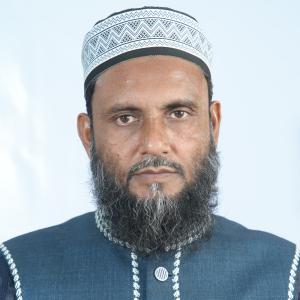 Md Mazedur RahmanGaibandha-1, Jamaat-e-Islami
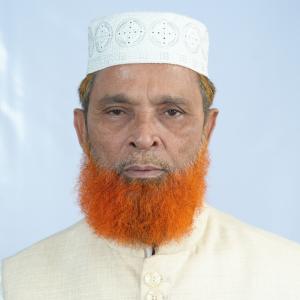 Md Abdul KarimGaibandha-2, Jamaat-e-Islami
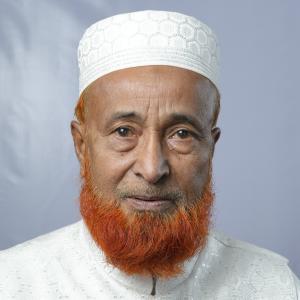 Abul Kausar Muhammad Nazrul IslamGaibandha-3, Jamaat-e-Islami
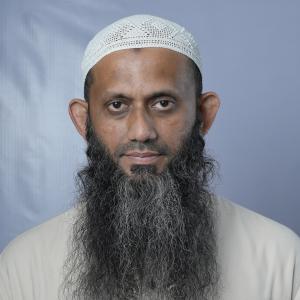 Mohammad Shamim KaiserGaibandha-4, BNP
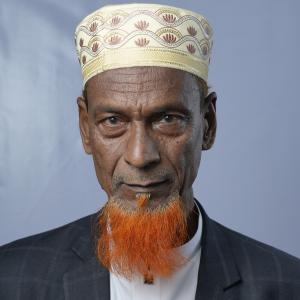 Md Abdul WaresGaibandha-5, Jamaat-e-Islami
Source: Parliament of Bangladesh | Updated 24 October 2026